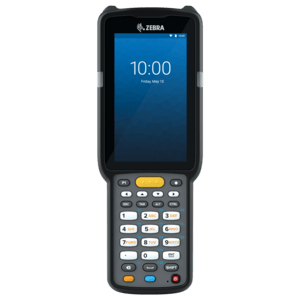
A barcode has to be seen to be read. A UHF RFID tag does not — it answers from inside a box, from the back of a shelf, hundreds at a time. That difference is why a stock count that takes a team two days with barcode scanners can take one person an afternoon with an RFID terminal. This page collects the mobile computers we stock with an integrated UHF RFID reader.
When RFID is worth it — and when it isn't
RFID pays off when: you count the same stock often (retail cycle counts, tool and asset audits), items are packed or stacked so barcodes aren't visible, you need to find one specific item in a large area, or goods move through a door or gate in bulk.
Barcode is still the better answer when: you scan items one at a time at a fixed point (checkout, packing bench), you don't control the tagging of incoming goods, or the item value doesn't justify the cost of a tag on every unit. RFID requires every item to carry a tag — that is the real cost of the project, not the reader.
Integrated reader or add-on sled?
All terminals on this page have the RFID reader built in. That matters in daily use: nothing to pair, nothing to charge separately, nothing to lose, and one device in the hand instead of two. A sled adds RFID to a terminal you already own and typically offers longer read range, but it doubles the hardware to manage.
Which form factor?
| Form factor |
Models |
Typical use |
| Smartphone form |
Zebra TC22R, TC53e RFID, Honeywell CT70 (X1R), CipherLab RS51 |
Retail cycle counting and mixed roles — staff who also scan barcodes and look up stock |
| Pistol grip |
Zebra MC3330XR, MC3390XR |
High-volume reading — warehouse inventory, receiving and dock work over a full shift |
| Wearable |
Zebra WS501-R |
Hands-free reading where the worker also handles goods |
| Rugged tablet |
Getac F110 (G6 / G7 / G7 EX), Getac G140 |
Vehicle mount, field and yard work with a large screen; EX versions for hazardous areas |
| Long range |
Newland MT93 Pro UHF |
Reading across a wider area in a single sweep |
Before you buy
Read range depends on the tag, not just the reader. The same terminal reads a large logistics tag from several metres and a small item-level tag from centimetres. Test with your actual tags before committing to a fleet.
Metal and liquid interfere with UHF. Products in metal containers or with high water content need on-metal or specialist tags. This is worth resolving in a pilot, not after rollout.
Check the regional version. UHF frequency bands differ by region; EU deployments need the EU band version. The part numbers below are the versions we stock for this market.
All terminals below are CE certified and covered by manufacturer warranty.
Scanning barcodes at distance instead? See the long range mobile terminals → Looking for standard barcode terminals? Browse all handheld terminals →